
Elda Cerrato, Biomorphism and Borders
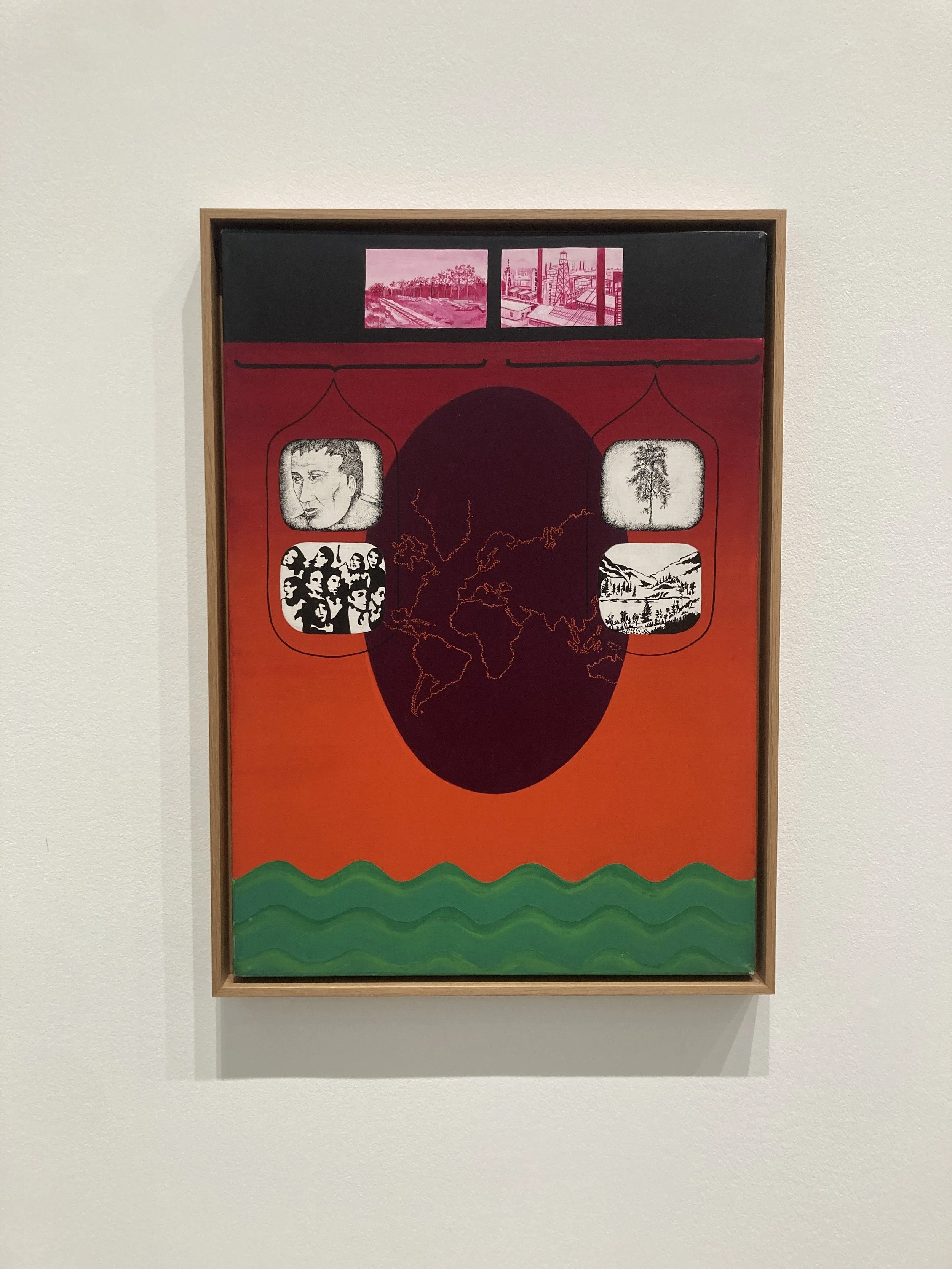
Repertorio de los Sueños. El Sueño de la Naturaleza (Serie de la Realidad) [Repertoire of Dreams. The Dream of Nature (Reality Series)], 1976
The first display of Elda Cerrato’s work in the United States at Gallerie Lelong in Chelsea comes at an incredibly compelling time in Latin American politics but not a unique one.
Following her work from 1965 to 1976, the show traverses Cerrato’s spiritual and artistic identity alongside the increasingly intense political environment surrounding her life in Argentina and Venezuela. The interplay of abstraction, the political, and spiritual identity intersect to inform a larger body of work from the artist. After a lifetime fleeing from fascism and authoritarianism from Italy to Argentina, Cerrato’s work serves as a continuing inspiration for artists and activists in their work and lives.
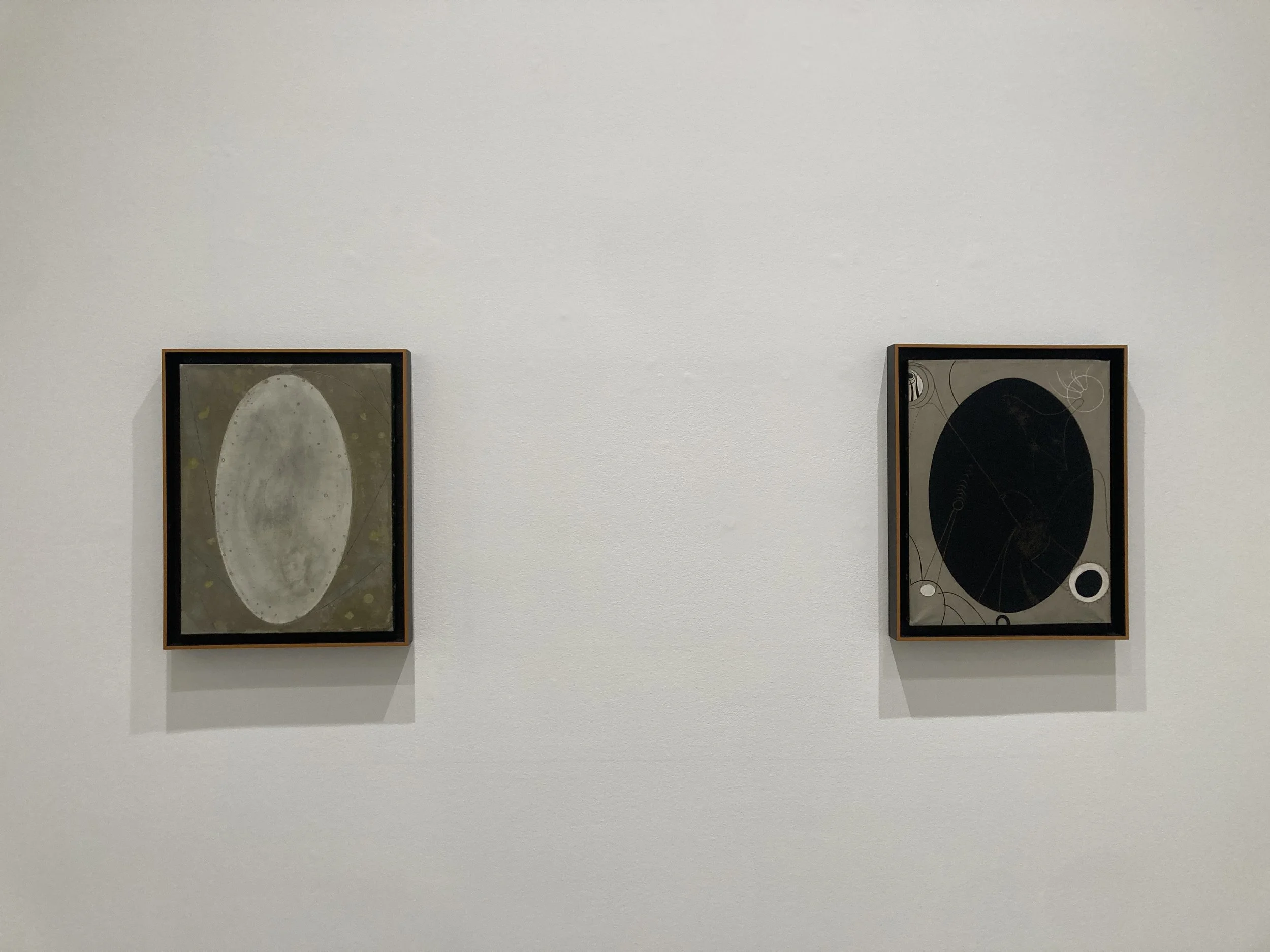
Left: Transformación de la energía que ingresa en energía libre. (Serie Entes Extraños. Epopeya del Ser Beta) [Transformation of incoming energy into free energy. (Strange Beings Series. Epic of the Beta Being)], 1965-66
Right: Nódulos genéticos de la línea Beta. (Serie Entes Extraños)[Genetic nodes of the Beta line. (Strange Beings Series)], 1966
We become intimately familiar with Cerrato’s spiritual investigations through abstraction in this first gallery; the paintings, dark and meditative, are how Cerrato’s vocabulary develops. The language she uses develops from abstraction informed by her background in biochemistry into a fiercely politically charged discussion. Her work became increasingly less abstract by 1972, adapting more symbols and identifiable imagery into the paintings. Motifs of crowds, borders, and industrial landscapes creep into this brighter, politically charged investigation of the spiritual and secular world. The shift that Cerrato takes in this year, influenced by the increasing political and social turmoil taking place in Argentina, paves the way for her future work.
The intersection of her background in biochemistry and abstraction with the dire need to engage politically at the time created one of her most well known series, “Maps and Multitudes”. This series, heavily featured by the gallery, details the biomorphic identity of history, communities, bodies, nations, and borders within Latin America. Cerrato utilizes not just biomorphic shapes of the past, but the visual language of borders to illustrate this point. Borders shift and contort into barely recognizable shapes, biomorphic themselves in these works. Borders become glaringly fleeting, their identities no longer tied to nation states.
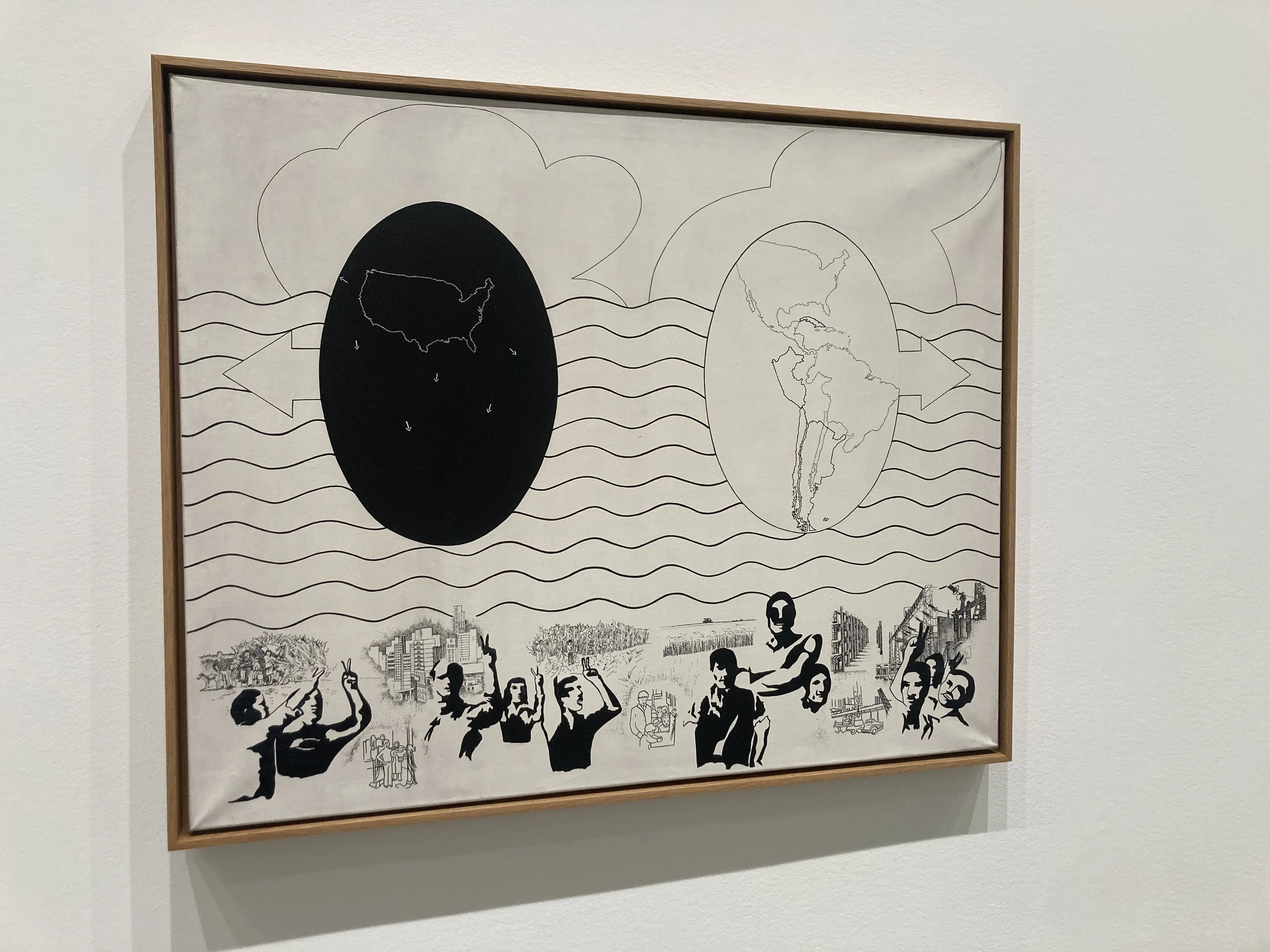
Geohistoriografia Relevamientos y Sueños de América [Geohistoriography: Surveys and Dreams of America], 1975
Many of her later works including Geohistoriografía Relevamientos y Sueños de América from 1975 investigate these relationships through representations of the borders themselves–removed from their context. This work in particular . leans heavily on the central depictions of the American continents borders, framed by ovals seen commonly in her early abstract investigations. Below the ovals sit a multitude of symbols of protest and resistance, backed by images of work and industry.
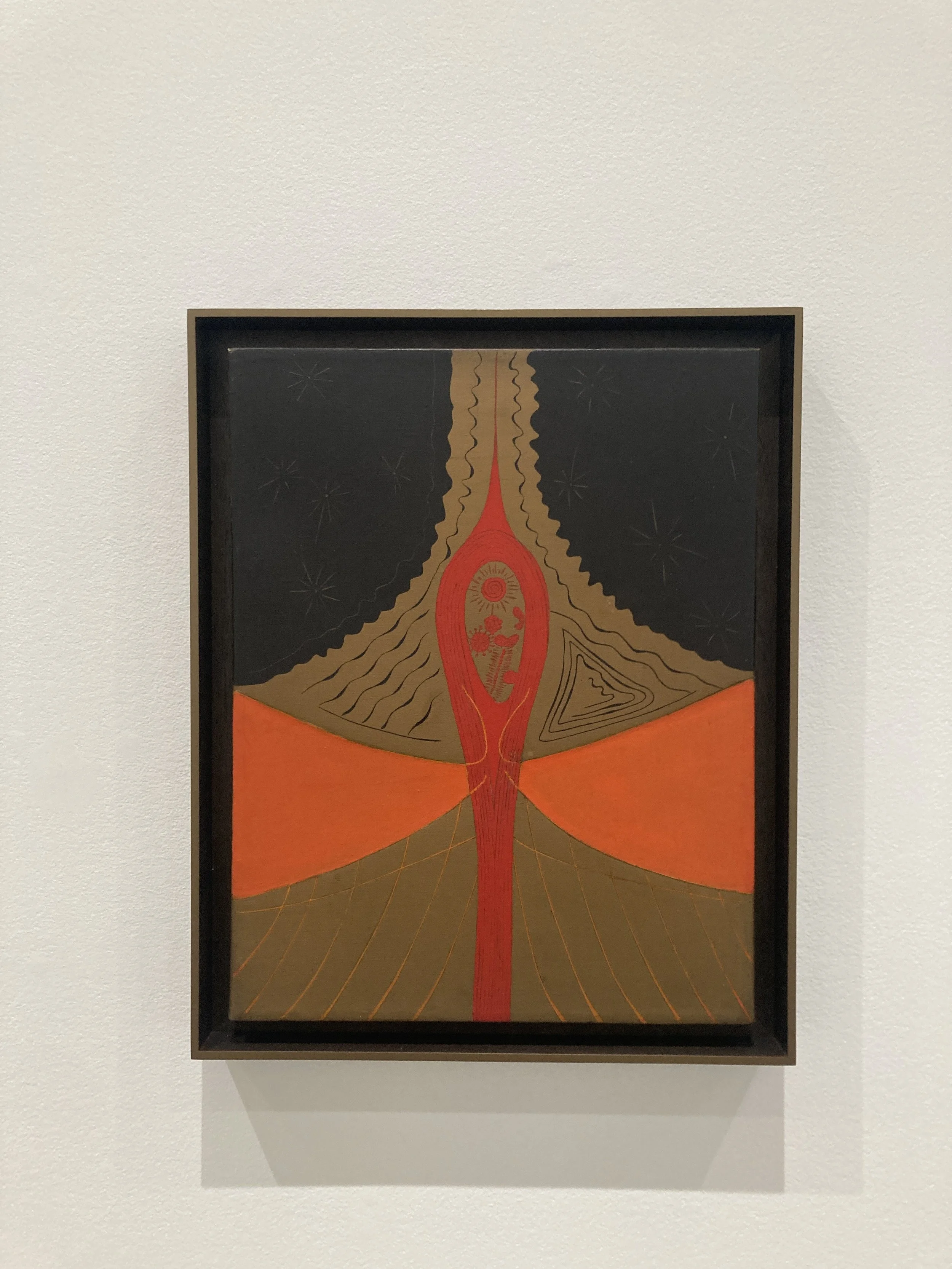
Despolarización mutua de dos entes. (ó Comunicaciones del Ser Beta). Etapa preparatoria (Serie: Entes Extraños. Epopeya del Ser Beta) [Mutual depolarization of two beings. (or Communications from the Beta Being). Preparatory Stage (Series: Strange Beings., 1970
In 2026, the United States continues to enforce its pervasive and sinister nationalism globally, especially throughout Latin America. The invasion and militarist control of prisons, resources, and individuals is nearly constant and serves a fascistic agenda. Borders become one of the strongest bargaining chips for a nation with nothing more to give. Cerrato understands this as the condition of colonialism and imperialism, but not as the only way forward. Her paintings branch into a future not yet shaped or rigidly defined. The visual language of shifting crowds in bright seas of blue and green elicits the hope of a future that grows from humanistic transcendence and political resistance.
The biomorphic state of our reality, past and present, defined by Elda Cerrato, exists within the past but also now and in the future. The shifting reality of borders, nations, and self exists as a centering reminder of a belief in a better future, informed by our past. Power is not absolute, borders are not secure, and the future is not defined by colonialist pasts.
Transcend/Transport: Paintings 1965 - 1976, a solo exhibition by Elda Cerrato, marking her first in New York, is on view until February 14th, 2026.
Writer: Jessie Miller
Editor-in-Chief: Karlye Whitt
