Geese Makes Music of Death for Gen Z Life
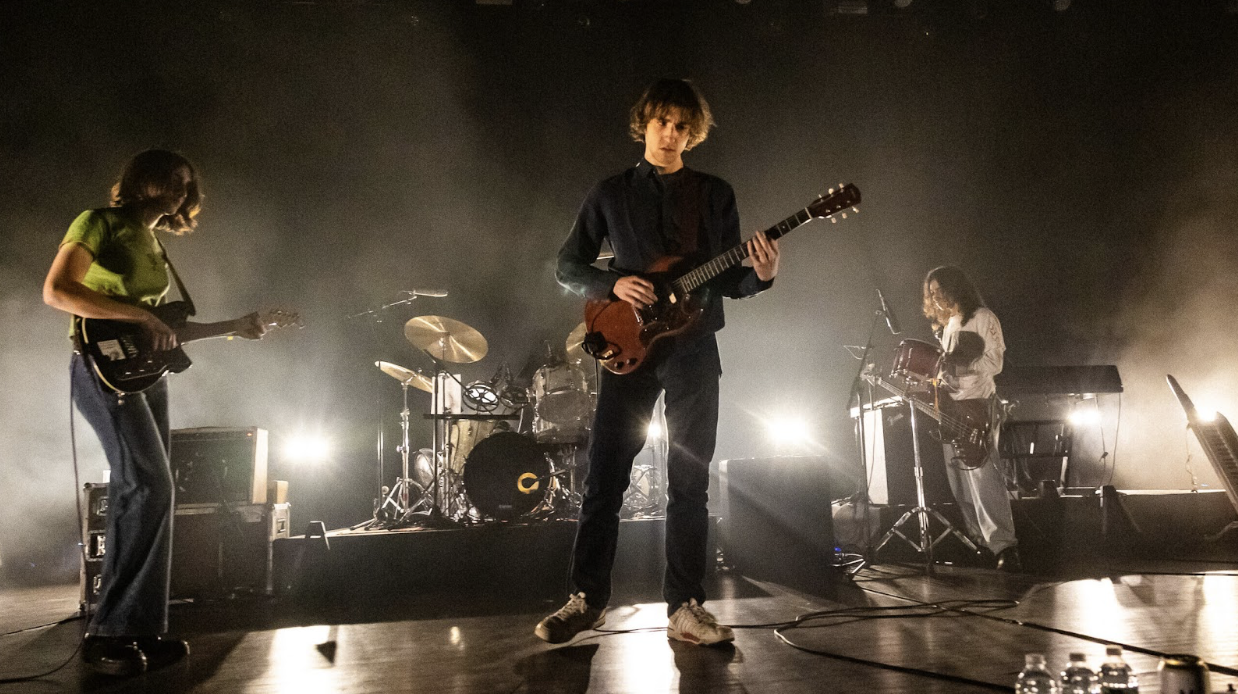
Geese, photo by Griffin Lotz/Getty Images
Recently, the band Geese performed on the network television behemoth Saturday Night Live. They played Trinidad and Au Pays du Cocaine, two songs off of their most recent (and brilliant) album, Getting Killed. They gave an impressive but subdued performance that the internet unsurprisingly had thoughts about. A lot of the discourse boiled down to older people saying they were the worst musical guest in the history of the show and younger people arguing that the older people just didn’t understand it. In preparation for writing this, I spent the weekend immersing myself in Geese’s music and I came out of the other side with one very clear thesis: Geese is postmodern rock for the generation of nihilism and old people not getting it is exactly why Geese, and the world they live in exist.
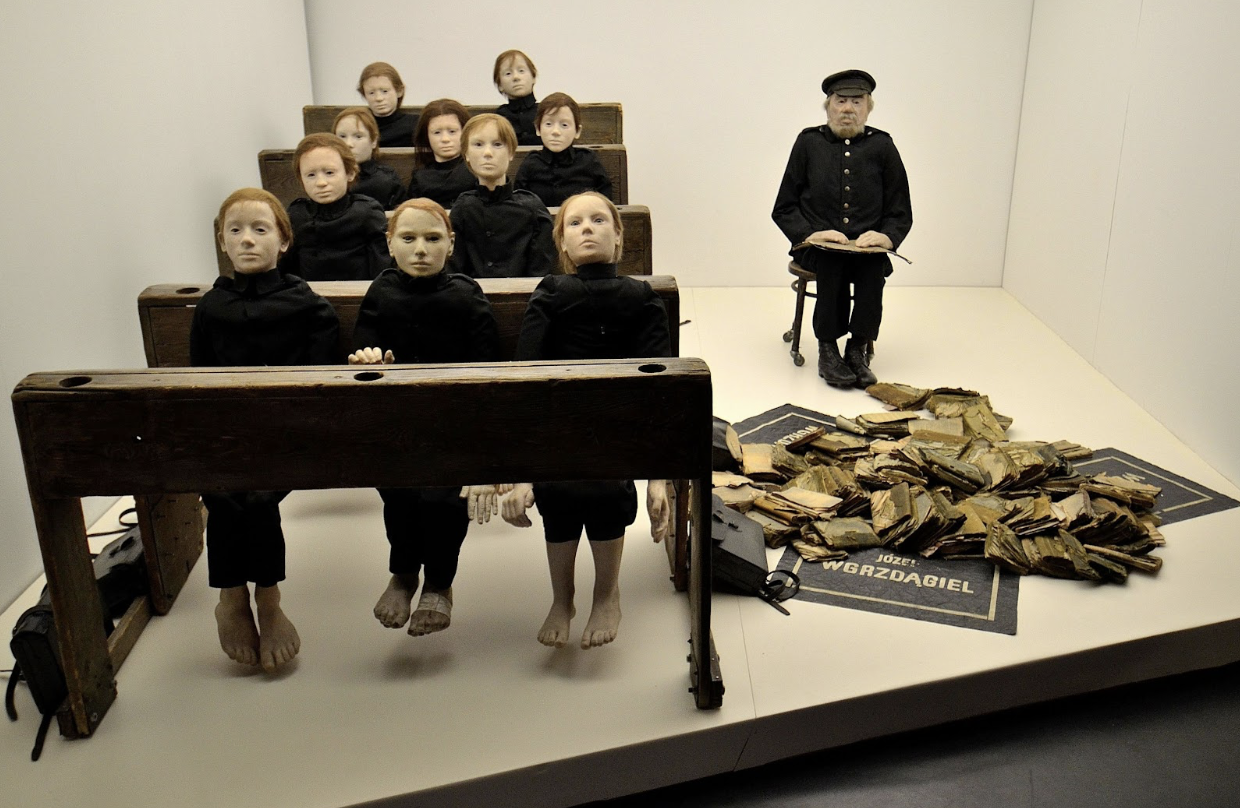
Dead Class of 1975 by Cricot 2
To make my point I want to tell you about one of my favorite theater artists in the “modern era” of the art form, Tadeusz Kantor and his Theater of Death. Kantor was a polish puppeteer, artist, theater director and scenic designer working during the mid to late 1900s, following WWII. A few of his plays, Wielopole, Wielopole and Dead Class are available to watch on YouTube with subtitles and if you love David Lynch or weird stuff in general I would say they are necessary viewing. What you will see are plays that live in death; not as a thing to be feared or cheated but as a reality of being alive. Kantor often sits on stage playing himself, witnessing events of his own life or events which led to his life. In Wielopole, Wielopole he is seated for the wedding of his mother and father, a dour event in which his mother stares ahead blankly with tears in her eyes, as though she has locked eyes with an embodiment of death. Everything on stage, including props, are described as “bio-puppets” and “poor objects” –objects that are common but have the power to “summon up forgotten history and memory.”
“A few of his plays, Wielopole, Wielopole and Dead Class … if you love David Lynch or weird stuff in general I would say they are necessary viewing.”
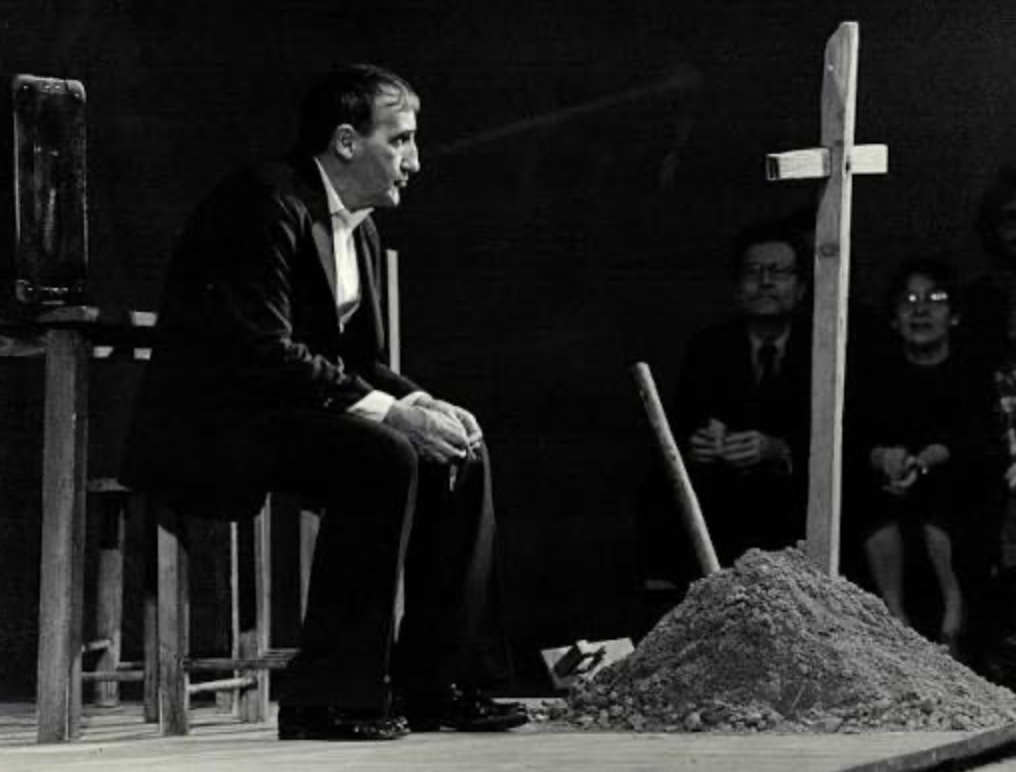
Tadeusz Kantor in Wielopole, Wielopole (1980). Image: Jerzy Borowski, courtesy of Tadeusz Kantor (c) Maria Stangret, Dorota Krakowska / Tadeusz Kantor Foundation
“summoning up forgotten histories that haven’t happened yet for a generation that sees the writing on the walls but has to live anyway.”
In the same way that Kantor is using art while alive to experience and confront death, Geese is using music to express the nihilism at the heart of a generation that feels doomed. In their song Taxes, Cameron Winter sings, “I should burn in hell … but I don’t deserve this, nobody deserves this. If you want me to pay my taxes … you better come over with a crucifix, you’re gonna have to nail me down” as the music swells to something that sounds almost hopeful before slowly populating your ear with growing levels of noise and stimuli. Lyrics and song structure like this signal a feeling of “f*ck it who cares” about being alive and being dead. Their albums act like poor objects, summoning up forgotten histories that haven’t happened yet for a generation that sees the writing on the walls but has to live anyway. Why shouldn’t their music reflect the nihilism at the heart of our modern world? Why should they care about creating something easily digestible when the world has never been that for them? They are creating memories of lives that they’re worried they’ll never get to live and they’re damn good at it. The great irony at the heart of the discourse is that older generations can’t grasp how their music led to this, in the same way they won’t accept how their actions led to the world Geese has to make music in.
Writer: Violet Jones
Editor-in-Chief: Karlye Whitt