The Unsung Symphony: A Testament to People of Color in Classical Music
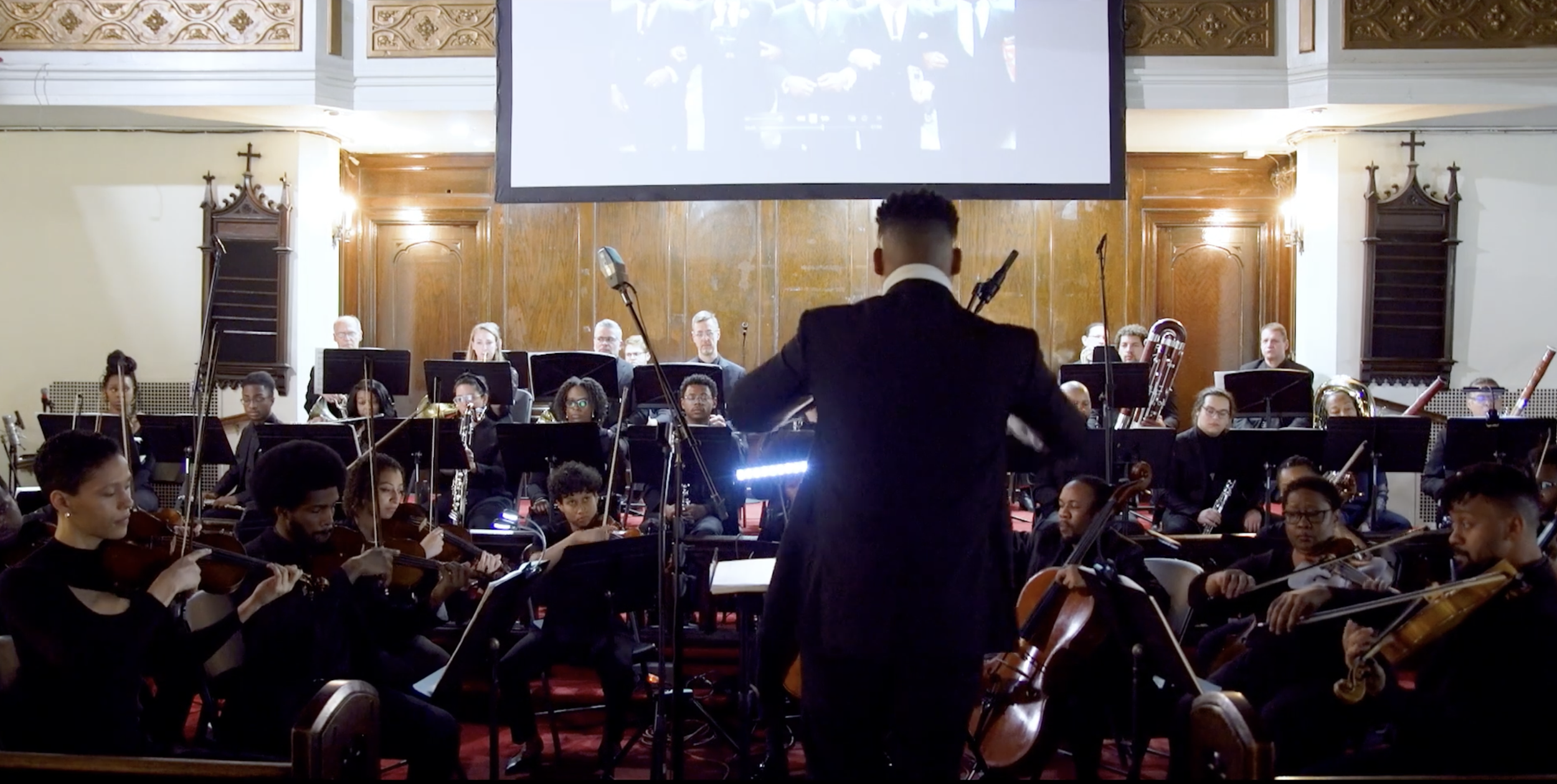
Photo from The Unsung Collective. 2024. “Negro Folk Symphony Mvt 2.”
The sanctuary of the Abyssinian Baptist Church in Harlem feels familiar as I step inside. The pews are ringed in a half circle around the pulpit on two levels, and behind the pulpit are choral risers. Although I had never before been inside a baptist church, I recognized the layout, and this church in particular, from photos of the Civil Rights movement. Adam Clayton Powell Jr. and Martin Luther King Jr. preached equality and advancement for Black Americans in this very church. The church was founded in 1808 by Ethiopian and African-American parishioners who left the First Baptist Church in response to segregated seating. Politics are not the church’s only long commitment; a church elder fondly referred to Abyssinian as, “a full-time house of God and part-time symphony hall.”
The Unsung Collective annually performs “An Unsung Symphony” at the Abyssinian Baptist Church, aiming to promote works by minority composers and platform world-class musicians of color. Led by founder and artistic director Dr. Tyrone Clinton Jr., the Unsung Collective has been performing for six years at venues throughout New York and the northeast.
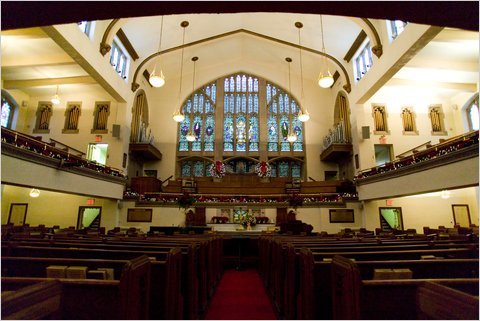
Photo Credit Piotr Redlinski (The New York Times) The sanctuary of Abyssinian Baptist Church in Harlem Dec. 20, 2009.
As people filter in, I take a moment to observe the performers. They wear all black, as is typical of classical musicians, but stray from stuffy suits. People wear shirts with fashionable keyholes, velvet paisley patterns on button ups, deep v necks under blazers. One of the bass players has a septum piercing and hair of all textures is styled to personal tastes, not a strict dress code. Public school students, part of a partnership between the Unsung Collective and the Bridge Program, sit in the choral risers with adult singers. There are more people of color in the room, as performers and audience alike, than white people. The Unsung Collective is clearly embodying its commitments.
Artistic director and conductor Tyrone Clinton Jr. enters to an emphatic round of applause. Before getting into the two longer pieces, Clinton conducts a rousing performance of “Lift Every Voice and Sing” by James Weldon Johnson and J. Rosamond Johnson, arranged by Roland Carter. The Black national anthem brings the audience to their feet, and a smattering of voices are singing along. If you’ve never heard a full symphonic arrangement of “Lift Every Voice and Sing,” seek one out immediately.
After a standing ovation, Clinton turns to the audience. He explains that the theme for this year’s Unsung Symphony, subtitled “Tchaikovsky and Simon,” is mental health for men of color under fifty. Pytor Tchaikovsky became the quintessential Russian composer, but struggled with mental health issues like anxiety and suicidal ideation. Clinton tells the audience that these are leading struggles for men of color under fifty. The final page of the program has three different New York based mental health programs listed, two of which are particular to Harlem.
The tune up, led by concertmaster Lady Jess, rings first from the oboes, to the winds and brass, and finally to the string section. The unison of eighteen different instruments played by more than fifty musicians feels otherworldly.
Tchaikovsky’s Symphony No. 5 in E minor is accompanied by a video of a performance art piece by Tislarm Bouie. The first three movements of the symphony are accompanied by the stories of three different men of color struggling with depression, anxiety, and sexuality. In the final movement, all three men seem to overcome their struggles through art and community. Between sections of the performance art, quotes from Chadwick Boseman, James Baldwin, Kendrick Lamar, and Malcolm X are displayed, entwining art, politics, and spirituality in a way that feels perfectly aligned with the setting. The main theme of the symphony is funereal in the first movement, but transforms across the piece into a triumphant march. This sonic experience of sadness into happiness, or conquering pain, pairs well with Clinton’s theme of mental health and Bouie’s art.
After another standing ovation, Clinton introduces the final piece of the night, Carlos Simon and Dan Harder’s Here I Stand, an oratorio about Paul Robeson. Robeson was a bass-baritone and football player who became known for his artistic and political involvement. He performed internationally, including as the first major artist to perform at the construction of the Sydney Opera House. Robeson was an advocate for Black people and the working class, and like Tchaikovsky, struggled with anxiety and depression. Clinton invites his brothers from Morehouse College to stand and be recognized in following Robeson’s commitment to community. Then, Clinton introduces Brandon Coleman.
Every eye follows Brandon Coleman down the aisle. He wears a champagne damask suit jacket and a black bowtie, and took his place at the pulpit with confidence. The second he begins singing, it is clear why he was chosen to portray Robeson – no one could have sounded more like the man himself. Coleman responds in his face and bearing to the music building around him and exudes confidence when he offers an essential line of Simon’s piece: “I have dedicated my life to freedom, and nothing less than freedom, for my people in America.”
Pictures of Paul Robeson appear behind the chorus, grounding the performance in the history at work. In a later scene, Coleman sings, “I am a singer of the folk songs of my people.” This declaration proves how well the piece fits with the Unsung Collective’s mission; Simon reasserts that Black people like Robeson and Coleman belong in an oratorio, a form popularized in European churches. Simon uses the chorus and orchestra in unison and counterpoint with Robeson’s lines throughout, lifting him up in high points and battering him down with difficulties, creating a fully rounded sonic and emotional experience.
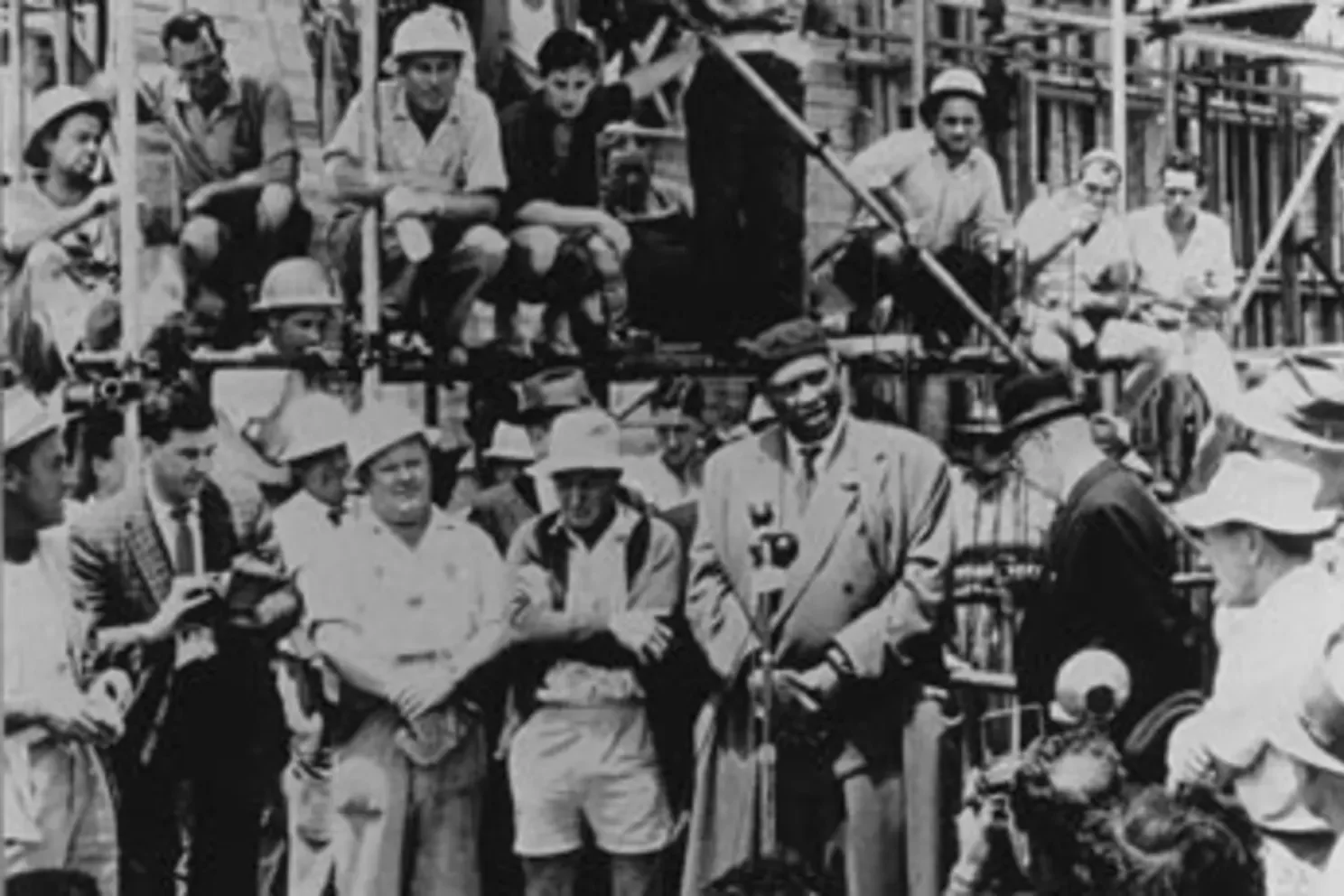
Paul Robeson sings in 1960 at the construction site for the Sydney Opera House.
In the final scene, “Apotheosis,” Robeson is lifted to divinity. Coleman and the chorus repeat, “The angels in heaven done signed my name,” well known from gospel performances. Then Coleman smiles and says, “Say it with me now.” Clinton turns around and begins conducting the audience, who tentatively join in. The placement of this performance in a Black church, with their historical emphasis on vocal participation and community, feels more appropriate than ever.
As a hyperactive teen, I struggled to understand the appeal of live symphony. Now, I love to be swept away by instrumental music. As with any other live event, the audience witnesses something, and the thing is changed by being witnessed in community. The break from thinking, the opportunity to listen and even watch the sounds move between instruments, and doing so with other people experiencing the same event touches something – I loathe to admit it – beyond words.
Walking home after the symphony, I mull over a quote from Malcolm X that was displayed during Symphony No. 5: “When ‘I’ is replaced with ‘we,’ even ‘illness’ becomes ‘wellness.’” What Clinton has created in the Unsung Collective goes beyond a single performance. The collective is committed to Black art, history, culture, and community at its very core. Spirituality, resistance, and creativity come together, as they so often do, to create a work that is not merely beautiful, but an assertion of belonging.
The Unsung Collective has not announced their next event, but has hosted a yearly Juneteenth event since 2024. I cannot recommend going strongly enough.
Writer: Pallas M. Gutierrez
Editor-in-Chief: Karlye Whitt