Sapphic Vampires and the Suspension of Disbelief with Opal Elwell
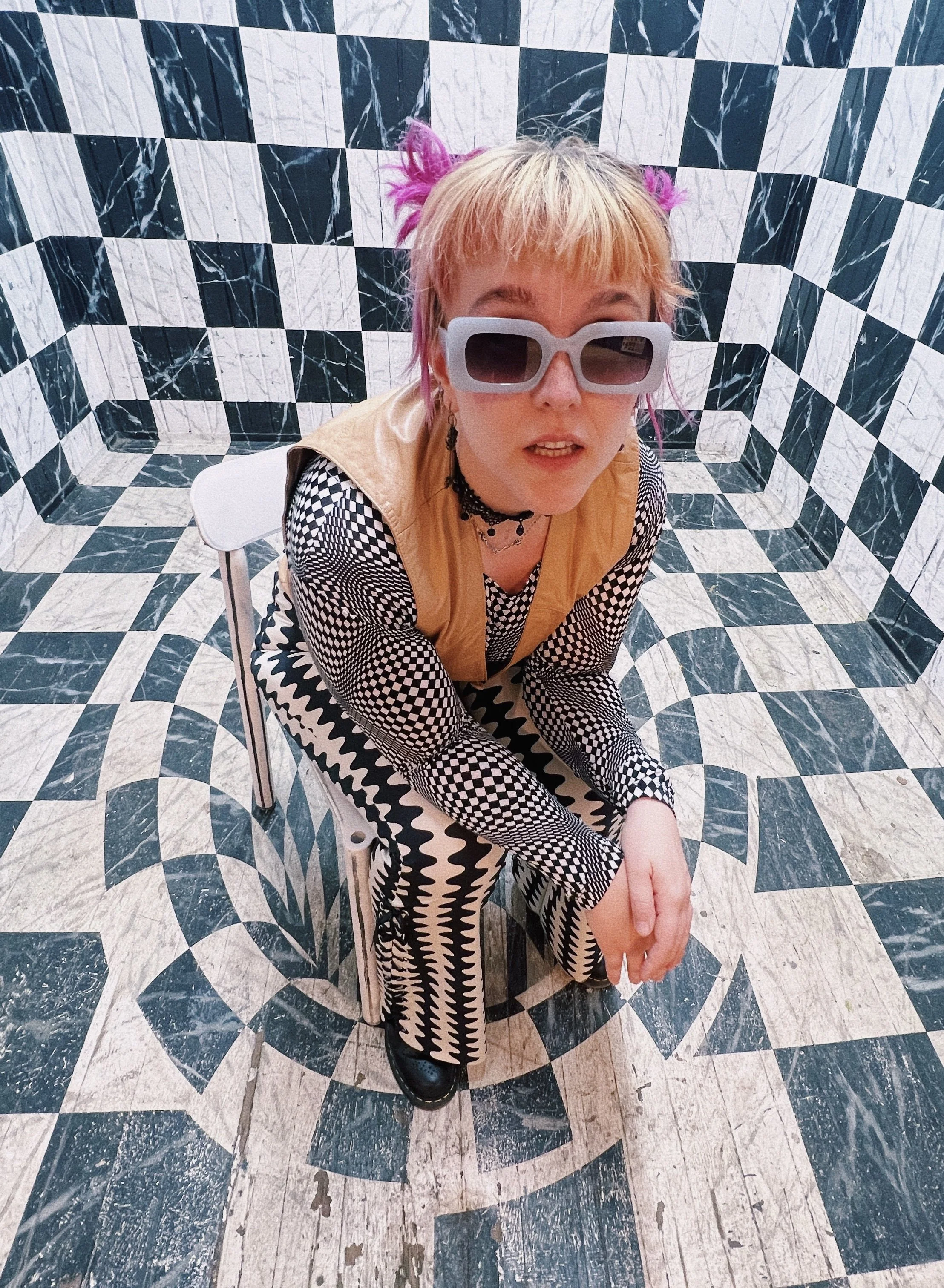
Photos courtesy of Opal Elwell.
How did you get into puppetry? Is there anything from your background that inspired you to get into the art?
I’ve loved theatre since I was a kid, I absolutely wore out my VHS of Annie (1982). In college I studied theatrical set design and fell in love with it. My professor and mentor, Sarah Krainin, is a puppetry artist as well as a set designer. She was my first real introduction to puppetry outside of the classic childhood television shows. I had the opportunity to assistant direct an object theater piece alongside her in my final year of school, and from there I was hooked.
Tell us more about your time working for Blue Man Group and Sleep No More. What are the biggest things you learned in those spaces?
I worked in the props department for both BMG and SNM, and during my time in those companies I really was living my dream. I formed really meaningful relationships, and learned so, so much from my fellow artists. Both productions unfortunately closed at the start of 2025, and while I mourned the loss of those productions and communities, I left those jobs having gained confidence in my abilities and the understanding that my dream had changed- I was ready to start making my own art.
“I’ll find myself with these scenes or tableaus all piled up and I know they all belong, I just need to find the right order to get the picture just right. Through this process, art becomes my language, and I can finally express the feelings where words just aren’t enough.”
What current projects are you working on for 2026?
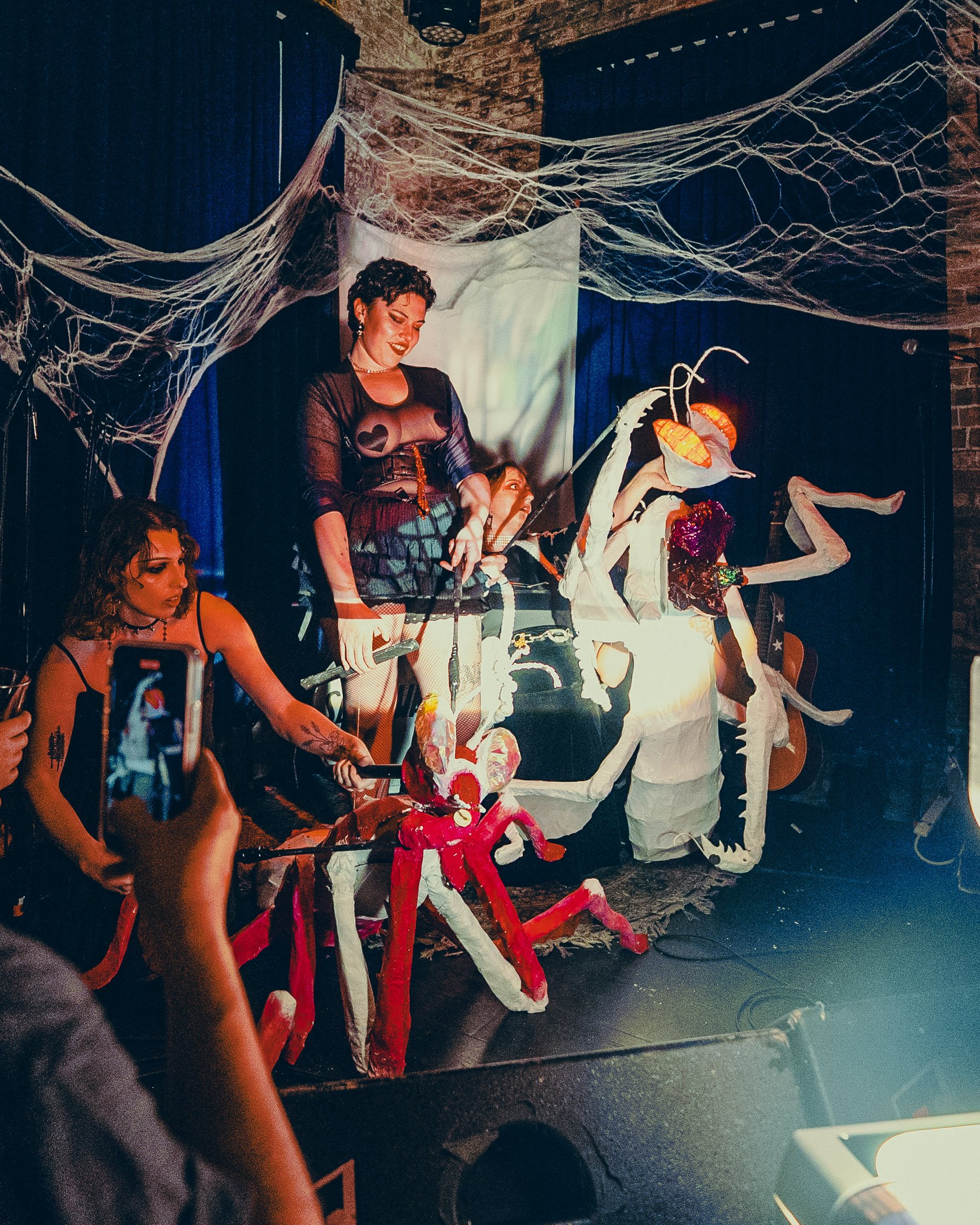
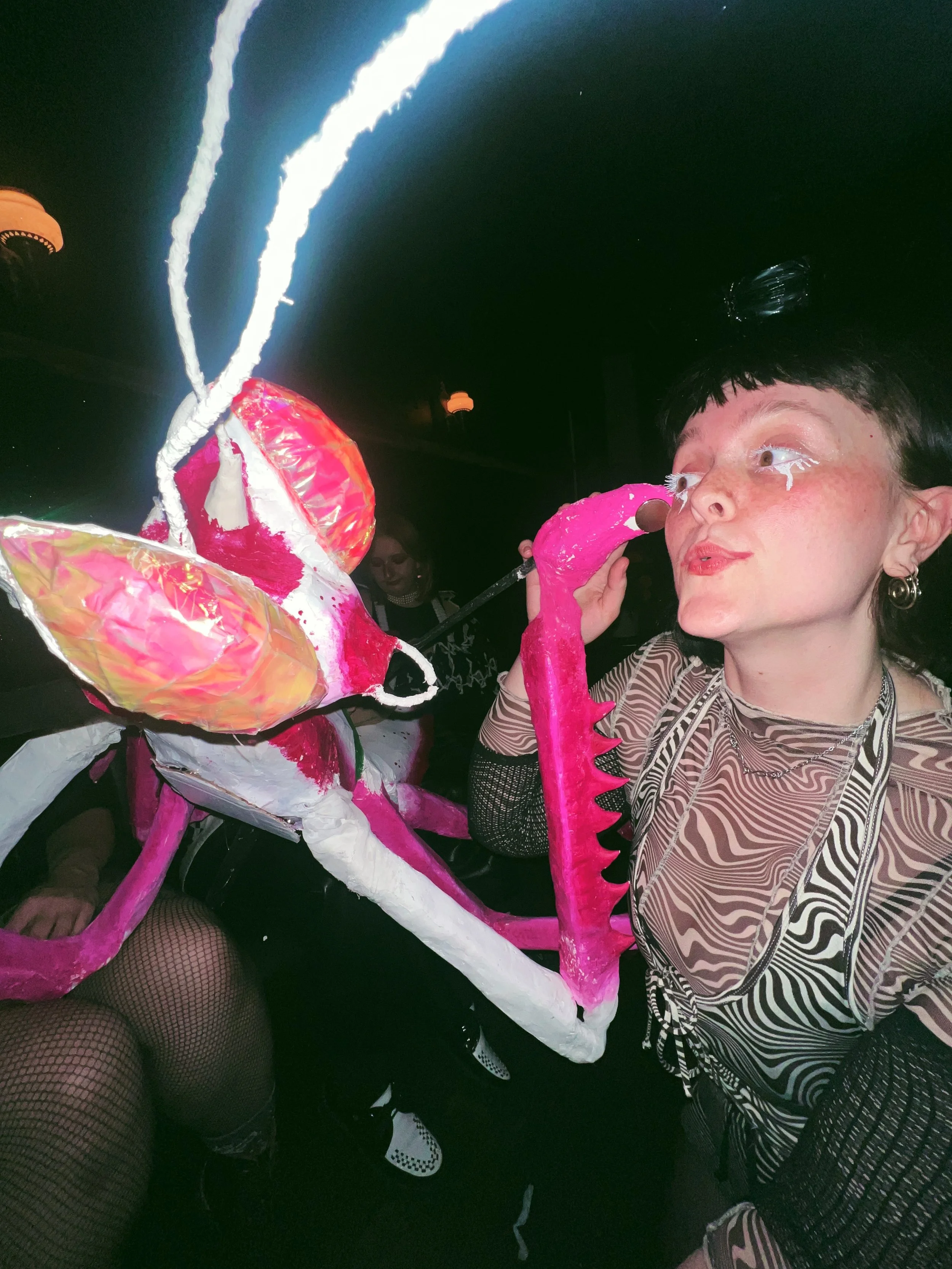
Currently my energies are being poured into Hymen Opus, a reworking of one of the first puppet shows I made. It’s a sapphic vampire spectacle with orchid mantises as the main players. Through this work I am exploring my own sexual identity, specifically through the lens of my childhood. Being able to fully explore those feelings and memories without the weight of religious guilt has been incredibly healing. It will be shown on March 22nd, 2026 at the Stone Circle Theatre, and as part of the New Orleans Giant Puppetry Festival this April.
What’s your creative process like from start to finish?
The best way I can describe it is a sort of meditative pandemonium. It starts with an emotion or feeling, which is often connected to a foggy memory. My strain of synesthesia tends to manifest as tying materials/textures to memories, so in the beginning it’s a jumble of objects and snapshots and stirrings that make absolutely zero sense to me. Then, after weeks of banging my head against a wall trying to understand what it is I am experiencing, I hit what I think of as the kaleidoscope phase. I’ll find myself with these scenes or tableaus all piled up and I know they all belong, I just need to find the right order to get the picture just right. Through this process, art becomes my language, and I can finally express the feelings where words just aren’t enough.
“AI is the antithesis of connection. It doesn’t allow us to think or feel for ourselves, let alone others. It is isolating and deceiving. I can’t imagine any real satisfaction comes from asking a computer to paint you a picture.”
With the rise of AI how do you feel puppetry fits into the art world right now and inspires ownership of creativity?
I absolutely love the concept of the suspension of disbelief. If you just allow something to be magical, then it is. When I watch live theatre, for a moment I feel so attached to the strangers around me because I can feel us all building the world together. The world on stage exists because we believe it does. Puppetry takes it one step further- the puppets have LIFE because we believe they do. They laugh, they love, they grieve because we want them to, because we desire connection and understanding. That connection is a sort of magic that is so fundamental to our humanity. AI is the antithesis of connection. It doesn’t allow us to think or feel for ourselves, let alone others. It is isolating and deceiving. I can’t imagine any real satisfaction comes from asking a computer to paint you a picture.
What is special about puppetry that differs from other art forms?
What first stands out to me is its accessibility. Object theatre is a kind of puppetry that uses everyday found objects as puppets (a rock, a water bottle, a string, a piece of trash, a tissue, etc). It doesn’t cost anything, requires no physical transformation of the object, and no training. It’s something we do as children, all you have to do is play. The two fundamentals of puppetry are breath and focus, things we already know how to do. Just transfer those into any object you want and you’re a puppeteer!
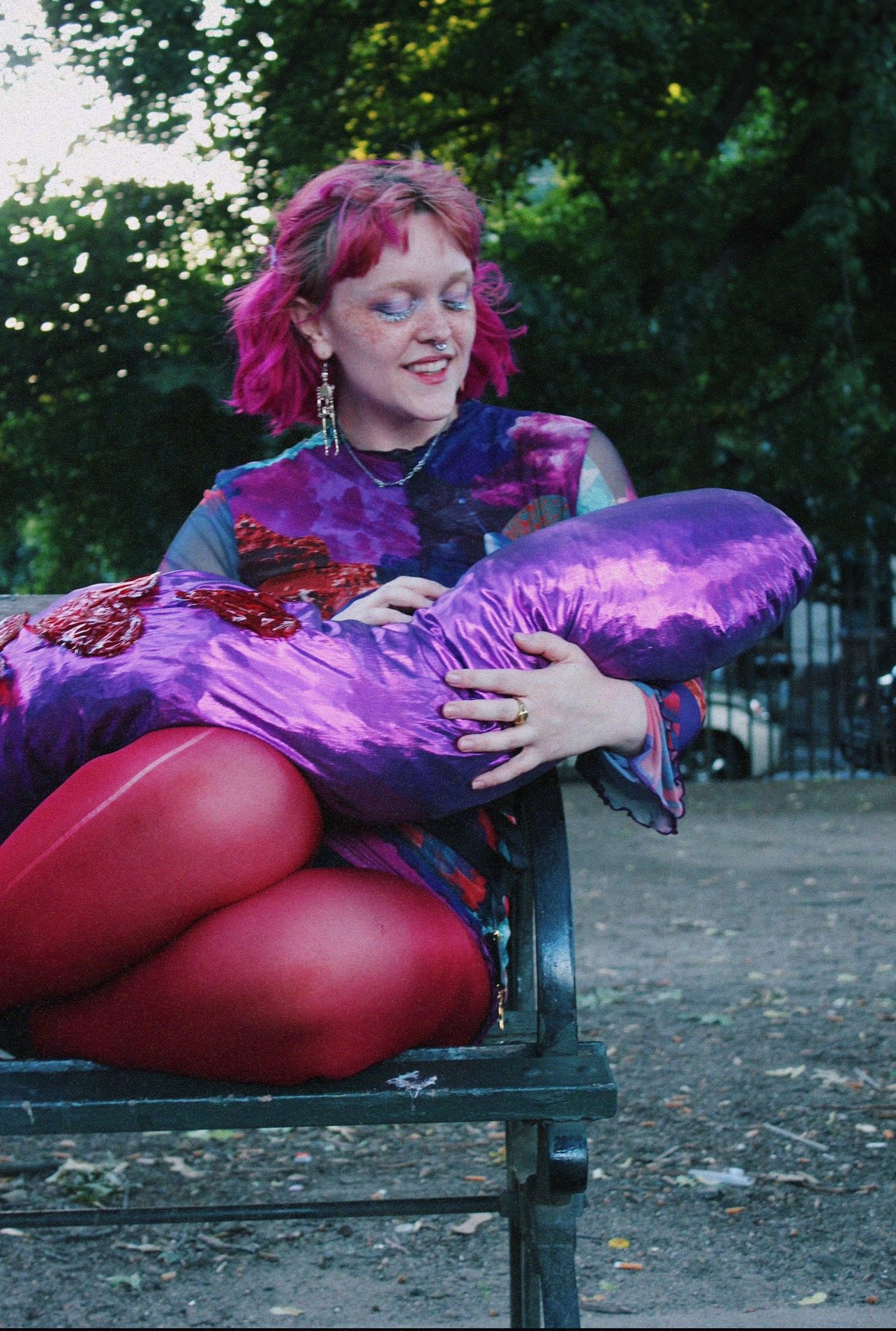
If someone wanted to get into puppetry how do they do it?
The first step is probably the most important one: go to local puppetry shows! Not only is it important to support local artists, but it is also the best way to make friends in the community. In my experience, people are always looking for extra puppeting hands, and the best way to learn is through practice! Second step is to make a puppet! There are always workshops and crafting clubs that will have puppet making events (in the nyc area: @pincushionpuppetclub on IG, @puppet_club_nyc on TT), or there’s a wealth of informative videos on YouTube which is where I’ve personally found the most help. If you’re looking for a workshop to get started, I’ll be leading a marionette design and fabrication workshop in March! Thirdly, when you want to start performing, the best way to get started is by doing puppet slams! Similar to poetry slams, they’re a curated set of short-form puppetry acts, usually geared towards adult audiences. Slams are a great way to work out ideas and get your puppet on its feet, and I’ve never been to a slam where the audience hasn’t been extremely welcoming and supportive. You can find puppet slams near you at puppetslams.com
Has puppetry given anything unexpected to you or led you to other ventures? Lessons? Community?
The puppetry community is truly that- a community. I constantly find myself in awe of the people, the voices, and their stories. As I began pursuing puppetry more actively, I felt inspired to begin hosting community dinners. Not just for the puppetry community, but for everyone! We call them Family Dinner- we meet every other week in Bed-Stuy for dinner and a craft! It is always free, and open to all who are committed to culturing a safe and welcoming space. If you’d like to learn more check out @familydinner4eva on IG.