I Went to the Man Ray Exhibit and Accidentally Wrote a Manifesto
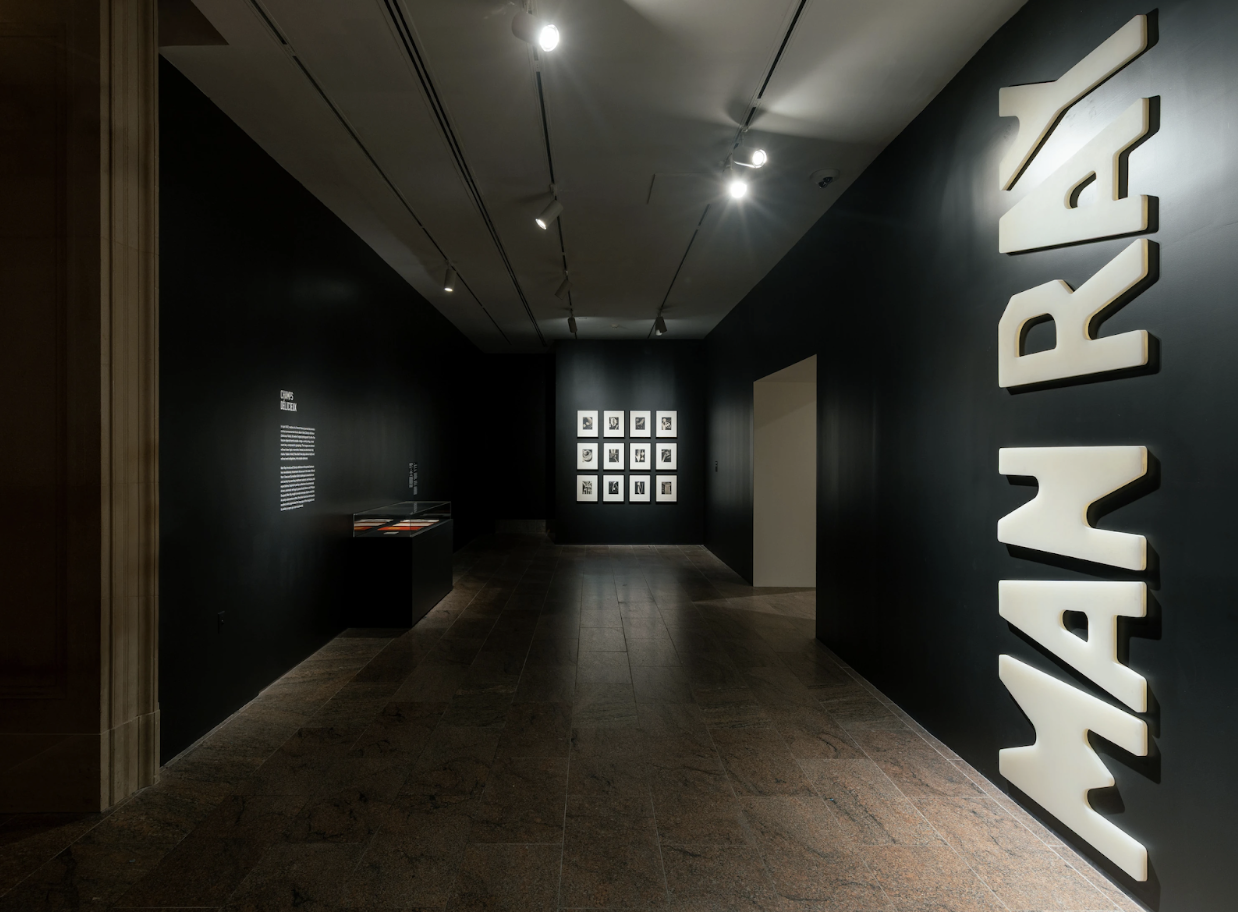
Photograph: By Anna - Marie Kellen / Courtesy of The Met
When Objects Dream at the Met was a brilliant homage to Man Ray, American Dadaist extraordinaire. From the actual curation to the layout of the exhibit, every detail honored how the artist’s brain processed the profound era of a changing world. From his own invention of the Rayographs and sculptures to films projected amidst his photography, audiences comprehended a strong theme of experiment and play, absurdity and grave seriousness, all the while pushing boundaries to their limit.
The exhibit focused on one decade of Man Ray’s work, the latter part of the 1910s through the 1920s when Dada stood on the precipice of Surrealism. Photos of his muse Kiki de Montparnasse (most notably Le Violon d’Ingres, Noire et blanche) lined the walls, the coat hanger sculpture Obstruction cast shadows across the floor as his experimental films L’étoile de mer, Emak-Bakia were projected throughout the galleries.The centerpiece of the curation was sixty one Rayographs on display.
In 1921, Man Ray was working in his darkroom making conventional photographic prints. According to his own account, he placed a sheet of photosensitive paper in the developing tray that was accidentally unexposed. Frustrated, he scattered tiny objects (thumbtacks, coils of wire, buttons…) directly onto the paper and briefly exposed it to light. When he developed the sheet, he saw ghostly silhouettes and luminous outlines where the objects had blocked and filtered the light. These Rayographs were artistic images with no camera involved. Just everyday objects transformed into abstract compositions with strong contrasts of light, shadow and dreamlike, surreal qualities. With nothing more than the word Rayograph on the object label, this dissuaded the viewer from assigning any particular meaning to what they see. This is quintessential Dada; it isn’t something to decode, but something to experience as it is.
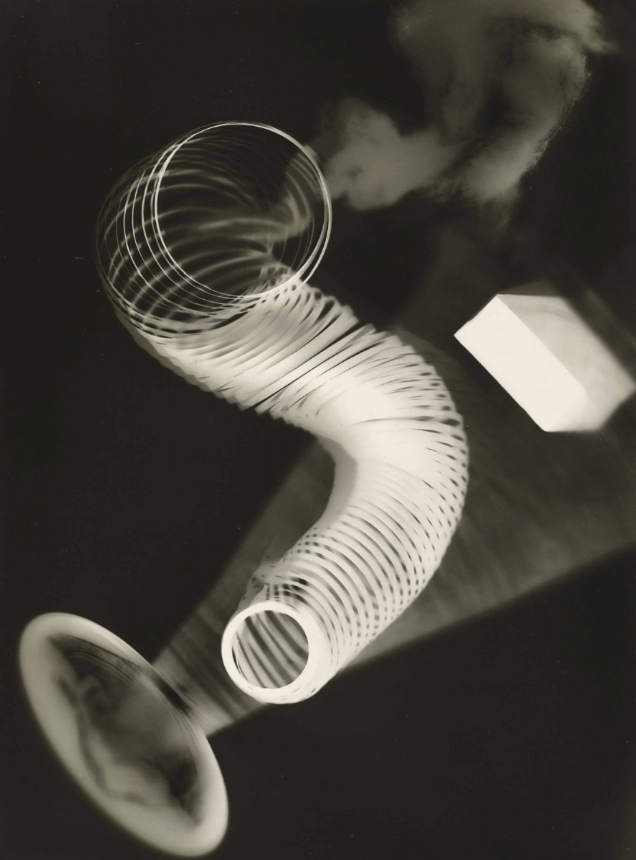
Man Ray, 1922, Untitled Rayograph, gelatin silver photogram, 23.5 x 17.8 cm
Dadaism was an early 20th-century avant-garde movement that embraced absurdity and chaos to challenge traditional artistic conventions. It emerged as a direct response to World War I, reflecting widespread disillusionment with the social, political, and cultural values that many believed had led to the conflict. Fueled by outrage and a sense of survivor guilt, Dada artists rejected logic and reason in favor of irrationality and spontaneity. Through this radical approach, they sought to expose the instability and hypocrisy of the modern world.
While WWI was not the first war photographed, it was the first war where photographic images of destruction and death were widely circulated on a massive, industrial scale due to access to the portable camera. Dada was a response against militarism and nationalism. It made a declaration: systems that support such corrupt societies are morally bankrupt. While art of its predecessors leaves the audience with the feeling “war is bad,” it still trusted logic, nation and language. Dada goes one step further to specify “the logic, nation and language that produced this war is an evil joke in which we refuse to participate.”
Walking through this exhibit one century later, the anger toward the system was palpable in a room of modern viewers quietly suppressing that very same rage. As history repeats itself (and how it repeats itself), this exhibit serves as a call to action to stop hiding behind antiquated art and start getting politically weird with it all.
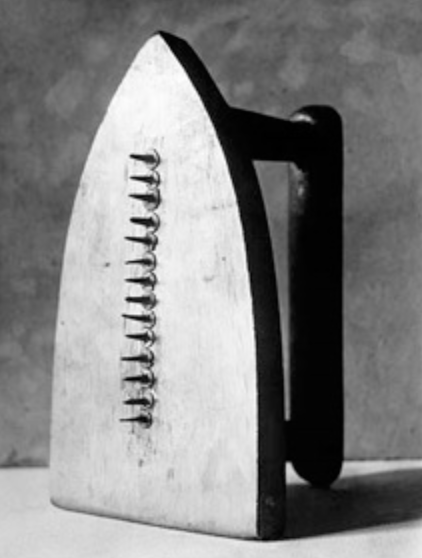
Man Ray, Gift, c. 1958 (replica of 1921 original), painted flatiron and tacks, 15.3 x 9 x 11.4 cm (The Museum of Modern Art, New York)
Art has arguably always been political. From the divine propaganda of Egyptian pharaohs, to the Church’s near-total patronage of artistic production during the Middle Ages, later supplanted by aristocratic power at the dawn of the Renaissance, art has consistently functioned as a vehicle for authority and their ideology. By the Enlightenment, art increasingly served as a medium through which artists could freely engage with themes of violence, class struggle and revolution, thus paving the road to Dada.
When creators specifically challenge that systemic dominance in art, it gets labeled as political.
What they really mean is “art used to make me feel good, now it challenges me.” Dada certainly challenged the art scene in its own distinctive way, but the question of what Dada truly accomplished still remains.War didn't stop, capitalism didn't collapse, fascism rose shortly thereafter, but that is not the point. Dada may have “failed” as activism, but it succeeded as sabotage. Without Dada’s anti-establishment sentiments and DIY aesthetic, we wouldn’t have punk, performance and protest art.
Punk did for music what Dada did for art: turned it into a medium of anti-commercialism, anarchy, and disruption. The Sex Pistols released their scathing single “God Save the Queen” on Queen Elizabeth’s Silver Jubilee, attacking the same class structures and consumerism as the Dadas. And in America, we have The Dead Kennedy’s whose debut single “California Über Alles” scrutinized California’s governor Jerry Brown and the Bay Area’s “hippie-fascism”.
Protest art has provided the visual shock and absurdity of Dadaism on a large, interactive scale. Bread and Puppet Theatre which historically has used found materials to form gigantic, exaggerated puppets was founded in the Lower East Side as a response to the Vietnam War, capitalism, and social injustice in the U.S, echoing Dada’s irreverence and spectacle. And just recently artist Jacques Tilly’s political caricatures of Trump and Putin were on parade in Germany which resulted in a defamation trial in Russia.
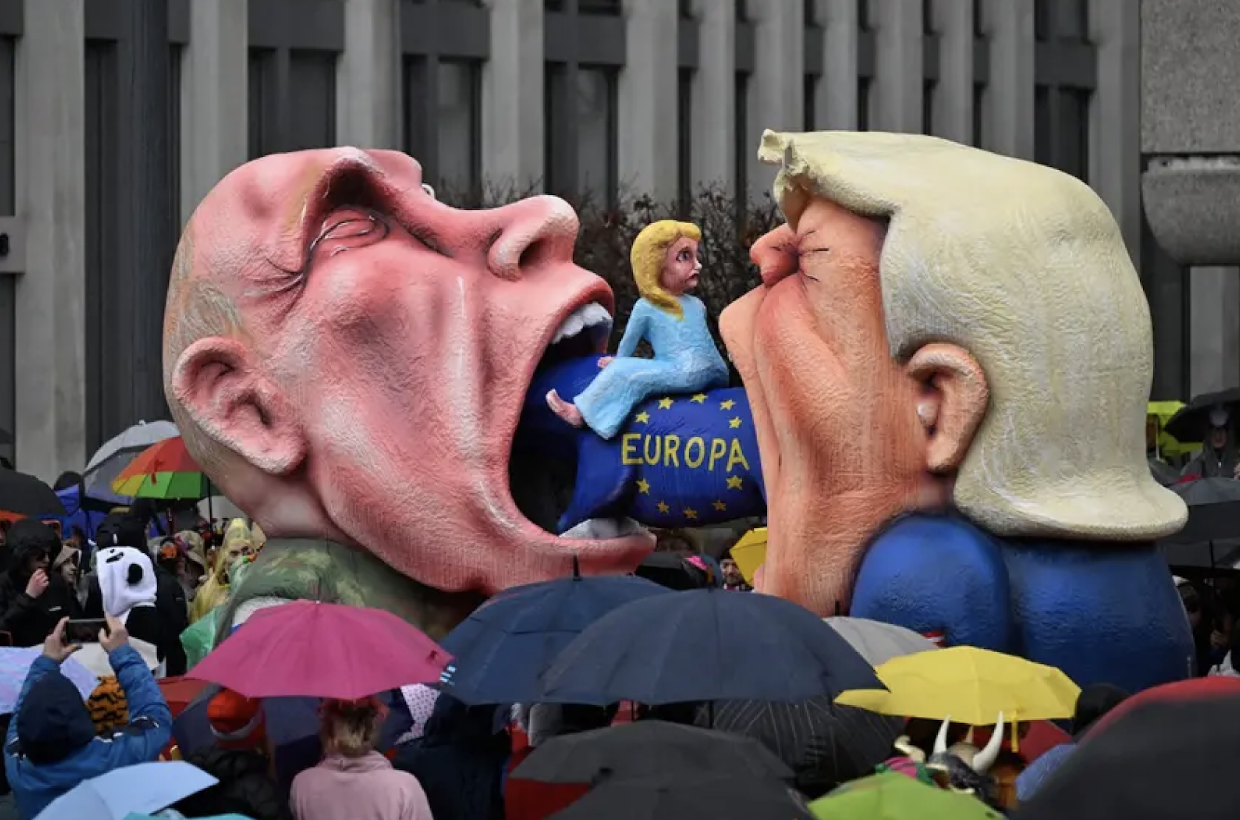
A carnival float designed by German artist Jacques Tilly (Photo by INA FASSBENDER / AFP)
So what do we do during our hourly inundation of images from Palestine, redacted files protecting predators gobbling our tax money, inflation, ICE (this list will have updated twofold by the time you read this)?
What do we do as artists? As curators? As an organization with donors?
I say: embrace the bizarre, the genre-bending, the absurd; acts of defiance against the systems that bind us. In every creative sphere, experiment. Even objects that seem mundane can become art. Rayographs remind us to create without limits. The Dadaists famously wrote provocative manifestos, rejecting conventional art and logic, challenging every norm. I tried my hand at it and felt empowered. Let us go forward, chaos as our canvas.
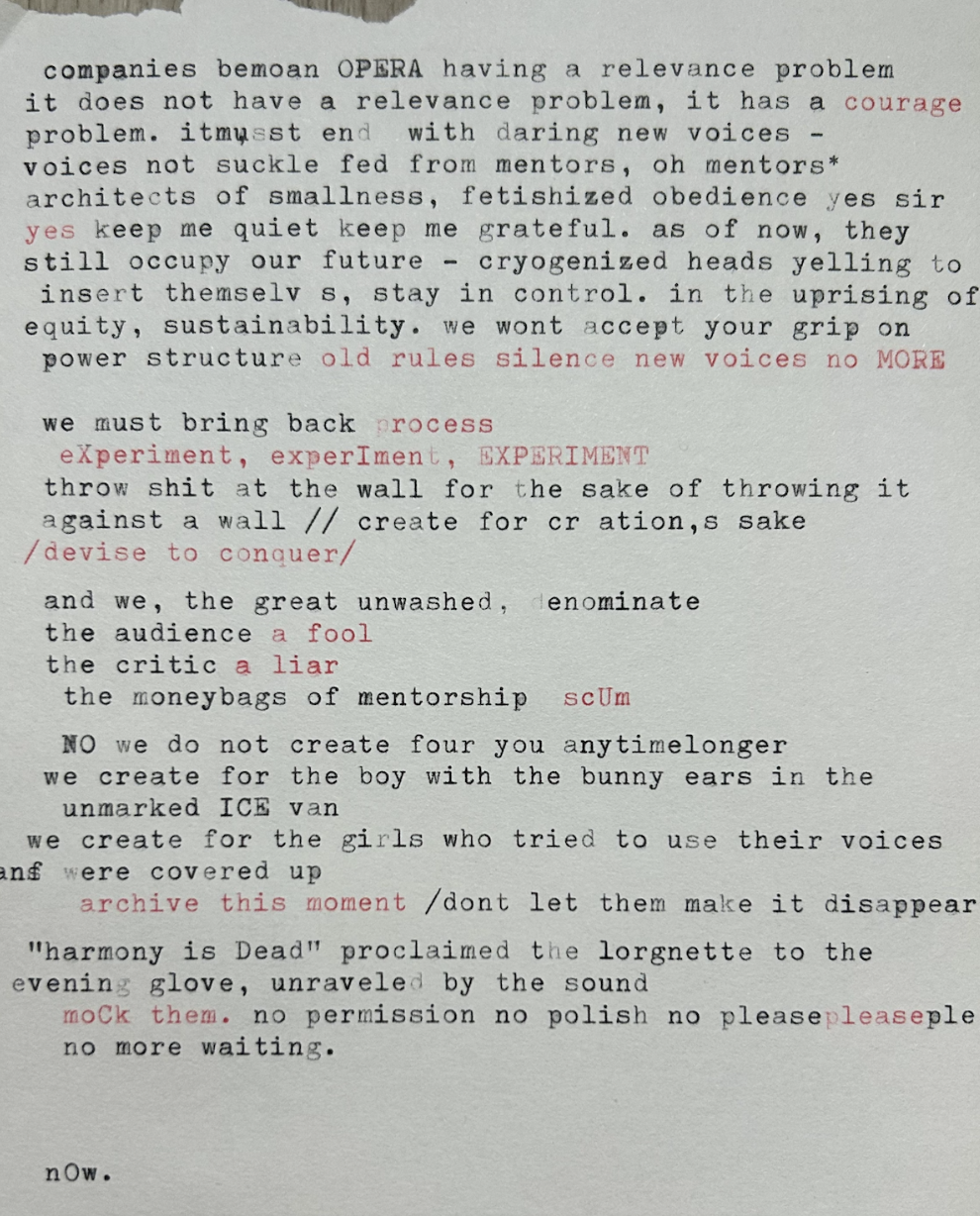
Bea Goodwin, librettist of Tabula Rasa, a Dada opera about Man Ray’s muse, Kiki de Montparnasse
Writer: Bea Goodwin
Editor-in-Chief: Karlye Whitt